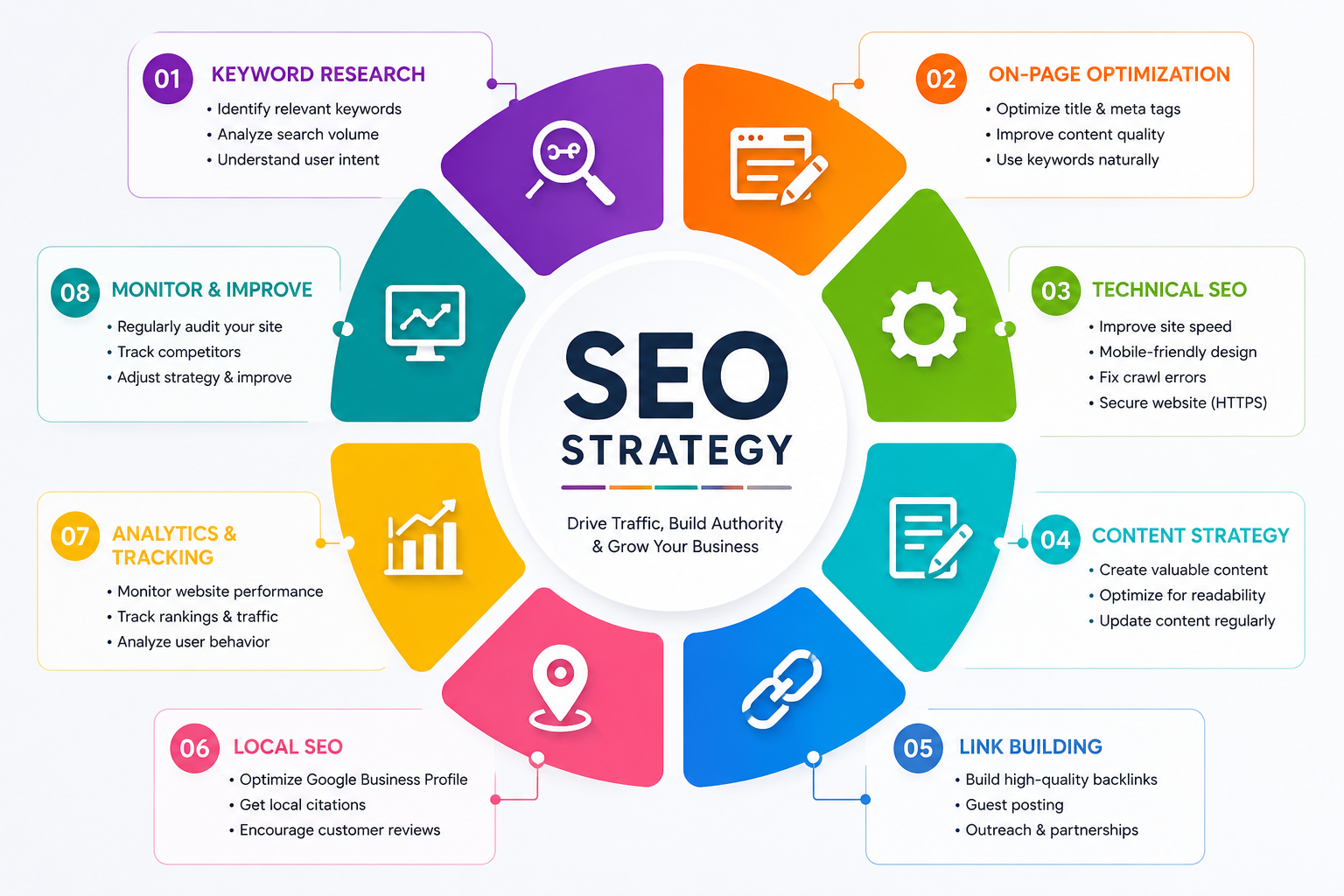
Search Engine Optimization (SEO) is a powerful digital marketing strategy that helps websites rank higher on search engines like Google. A well-planned SEO strategy increases website traffic, improves brand visibility, and generates quality leads.
The first step in SEO is keyword research. Identify relevant keywords that your target audience searches for and use them naturally in website content, headings, meta descriptions, and URLs. Focus on both short-tail and long-tail keywords to attract different types of visitors.
The second step is on-page SEO. Optimize title tags, meta descriptions, images, and internal links. Create high-quality, informative, and engaging content that answers users’ questions and provides value. Regularly updating blog posts and website pages helps improve search rankings.
Technical SEO is also essential. Ensure your website loads quickly, is mobile-friendly, and has a secure HTTPS connection. Search engines favor websites that offer a smooth user experience.
Another important part of SEO is off-page optimization. Build high-quality backlinks from reputable websites to increase domain authority and credibility. Guest posting, content marketing, and social media promotion can help generate valuable backlinks.
Local SEO is beneficial for businesses targeting specific locations. Optimize your business profile, collect customer reviews, and use location-based keywords to improve local search visibility.
Finally, monitor performance using analytics tools. Track keyword rankings, traffic, and user behavior to identify areas for improvement. By consistently applying these SEO techniques, businesses can achieve long-term online growth, attract more customers, and stay ahead of competitors in the digital marketplace.
No responses yet