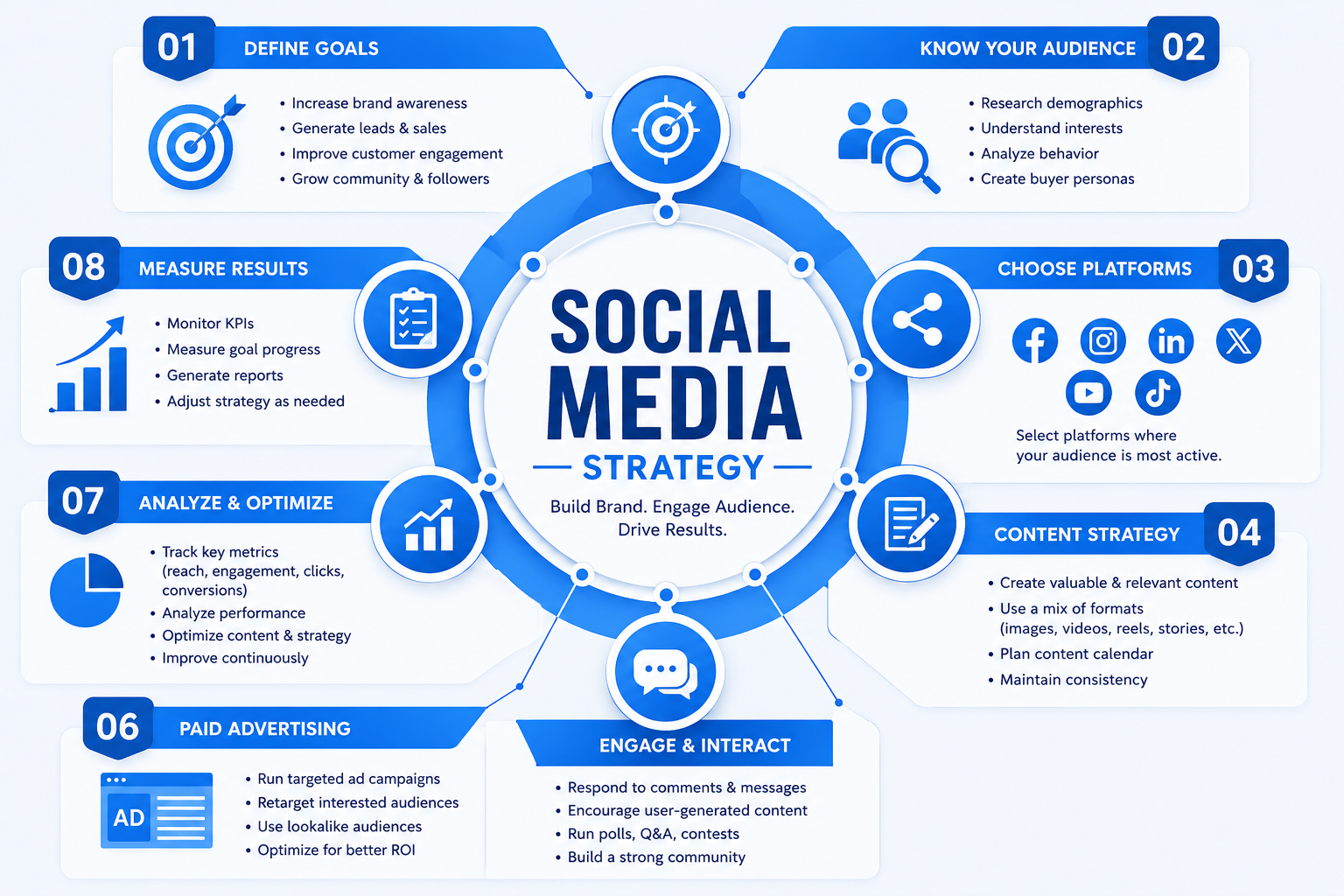
Social media marketing is one of the most effective ways to grow a business, increase brand awareness, and connect with customers. A successful social media strategy helps businesses reach their target audience, build trust, and generate leads through platforms such as Facebook, Instagram, LinkedIn, X (Twitter), and YouTube.
The first step in creating a social media strategy is identifying your target audience. Understanding customer interests, demographics, and online behavior helps create content that attracts and engages potential customers. Businesses should also define clear goals, such as increasing website traffic, generating sales, growing followers, or improving brand recognition.
Content plays a crucial role in social media marketing. High-quality posts, images, videos, infographics, and stories help capture audience attention. A balanced content plan should include educational content, promotional posts, customer testimonials, industry news, and engaging questions. Consistency is important, so businesses should maintain a regular posting schedule.
Engagement is another key factor in social media success. Responding to comments, messages, and reviews helps build strong relationships with customers. Interactive content such as polls, quizzes, and live sessions can increase audience participation and strengthen community engagement.
Paid advertising can further enhance social media performance. Platforms like Facebook Ads and Instagram Ads allow businesses to target specific audiences based on age, location, interests, and behavior. This helps maximize reach and improve return on investment (ROI).
Monitoring and analyzing performance is essential for continuous improvement. Businesses should track important metrics such as reach, engagement, follower growth, click-through rates, and conversions. These insights help identify what works best and optimize future campaigns.
Influencer marketing can also be a valuable strategy. Partnering with influencers who have a relevant audience can increase brand credibility and expand reach. Authentic collaborations often generate higher engagement and trust among potential customers.
In conclusion, a strong social media marketing strategy combines audience research, quality content, consistent engagement, paid advertising, and performance analysis. By implementing these elements effectively, businesses can build a strong online presence, attract customers, and achieve long-term growth in the digital marketplace.
No responses yet