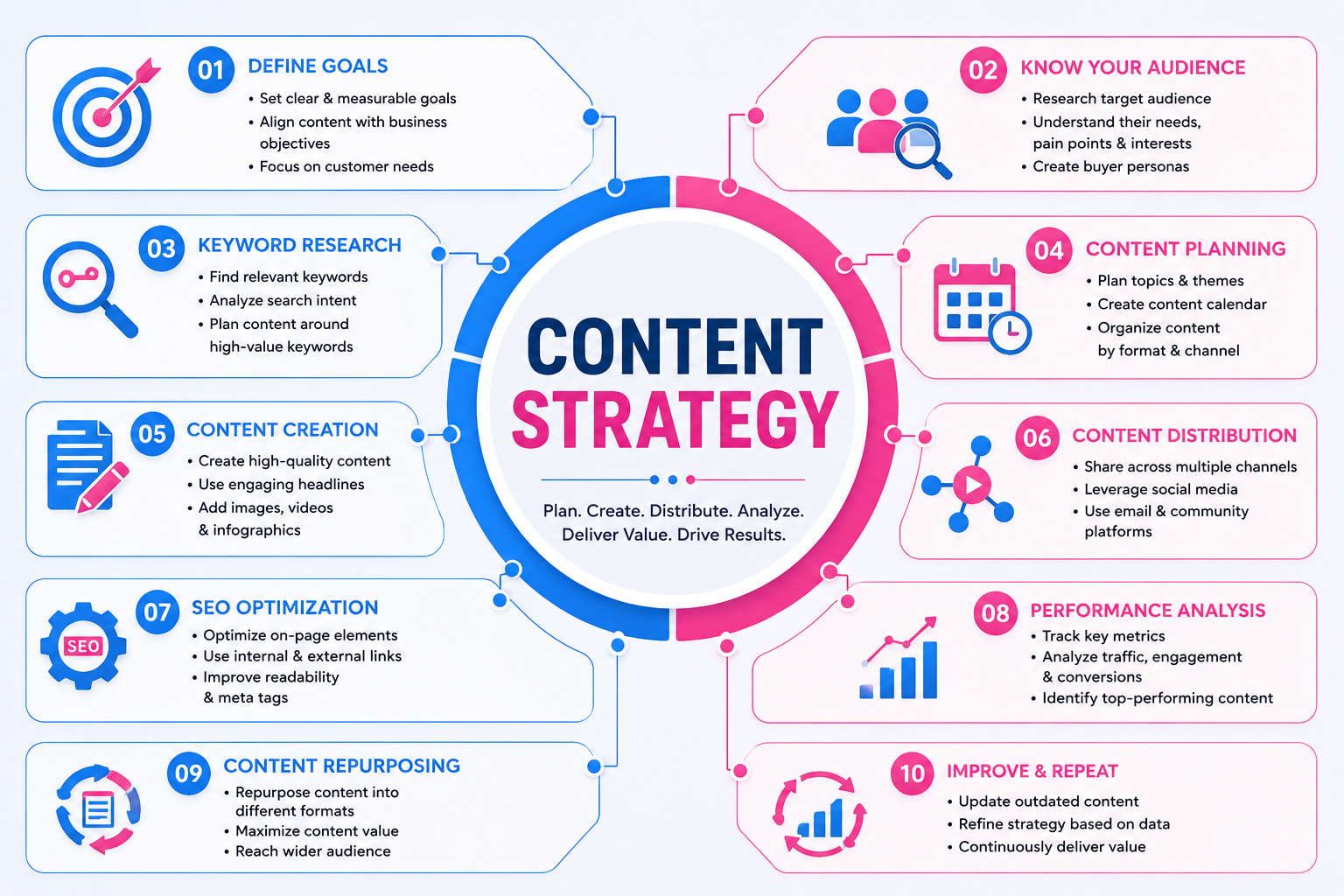
Content marketing is a powerful digital marketing approach that focuses on creating and sharing valuable, relevant, and consistent content to attract and engage a target audience. A well-planned content strategy helps businesses build brand awareness, generate leads, improve customer relationships, and increase sales.
The first step in developing a content strategy is defining clear goals. Businesses should determine whether they want to increase website traffic, generate leads, improve search engine rankings, build brand authority, or boost customer engagement. Clear objectives help guide content creation and measurement.
Understanding the target audience is essential for success. Businesses should research customer interests, needs, challenges, and online behavior. Creating detailed buyer personas helps marketers develop content that addresses specific audience problems and provides valuable solutions.
Keyword research is another important element of content strategy. Identifying relevant keywords allows businesses to create content that ranks higher on search engines and attracts organic traffic. SEO-optimized blog posts, articles, videos, and guides can significantly improve online visibility.
Content creation should focus on quality and value. Businesses can produce various content formats, including blog posts, social media updates, videos, infographics, eBooks, case studies, and email newsletters. High-quality content should educate, inform, entertain, or solve problems for the audience.
A content calendar helps maintain consistency and organization. Planning content in advance ensures regular publishing and aligns content with marketing campaigns, seasonal events, and business goals. Consistent posting builds audience trust and keeps the brand visible.
Content distribution is equally important. Businesses should promote content across multiple channels such as social media platforms, email marketing campaigns, websites, and online communities. This increases reach and engagement while maximizing content value.
Performance measurement is crucial for improving results. Key metrics such as website traffic, engagement rates, social shares, lead generation, conversion rates, and search rankings should be monitored regularly. Analytics tools help identify successful content and areas for improvement.
Repurposing content can extend its lifespan and reach. For example, a blog post can be transformed into social media posts, videos, infographics, or email content, allowing businesses to maximize their marketing efforts.
In conclusion, an effective content marketing strategy combines audience research, SEO, quality content creation, consistent publishing, distribution, and performance analysis. By implementing these practices, businesses can build a strong online presence, attract potential customers, and achieve sustainable business growth.
No responses yet